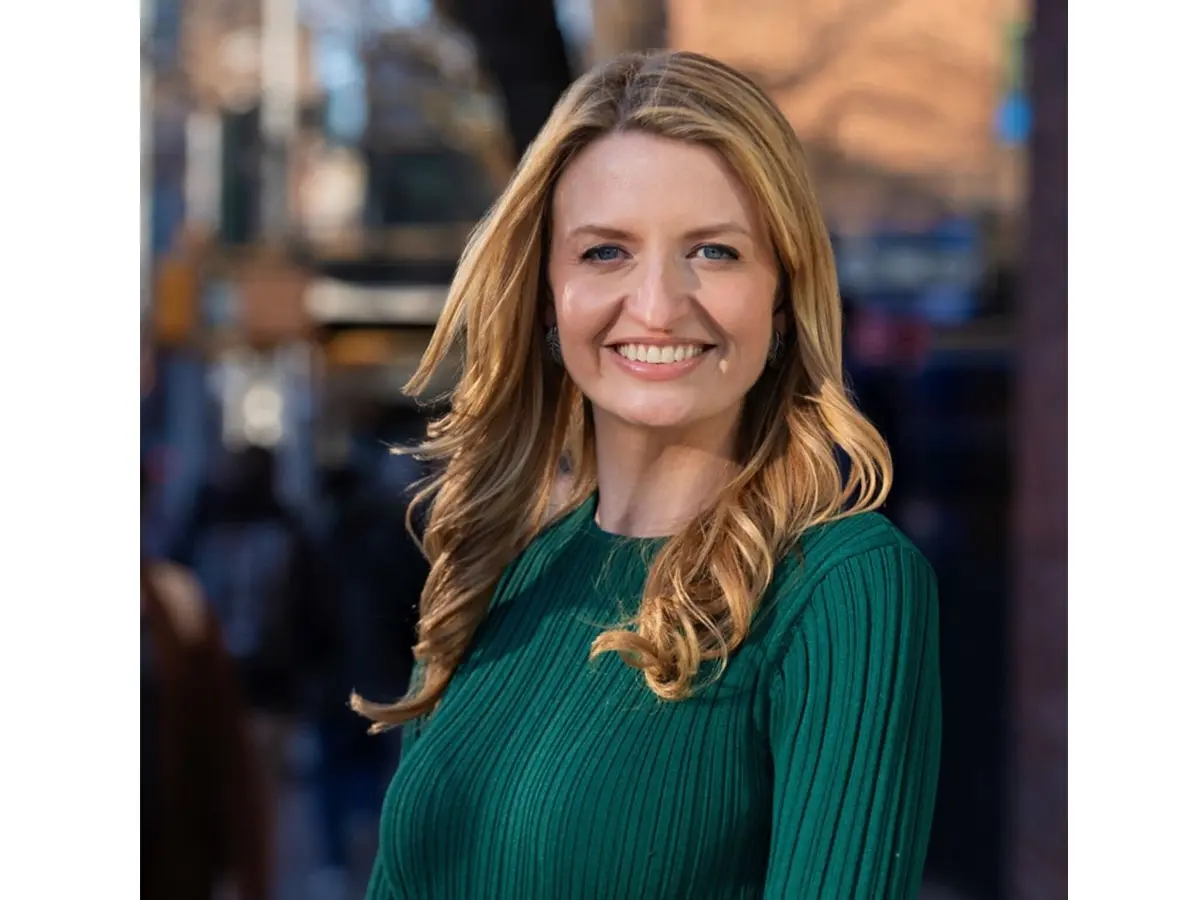
Virginia Maloney is an American technology professional and councilmember for New York City’s 4th City Council District. She won the election on the Democratic side on July 1st, 2025, with her platform focusing on affordability, public safety, government reform, and using technology to modernize city services.
“Councilmember Virginia Maloney represents the very best of public service. Her dedication to equity, her commitment to listening to every community, and her drive to create meaningful change align deeply with the mission of Unity For Equality. Through our ongoing collaboration, we have seen her unwavering willingness to engage with partners, uplift underserved voices, and champion initiatives that strengthen the fabric of our city. I am proud to recognize her leadership, her integrity, and the positive impact she continues to make for New Yorkers. We at Unity For Equality look forward to continuing our work with Councilmember Maloney as we fight for a fairer, stronger future for all New Yorkers.” — Neil Trivedi, Chairman, Unity For Equality
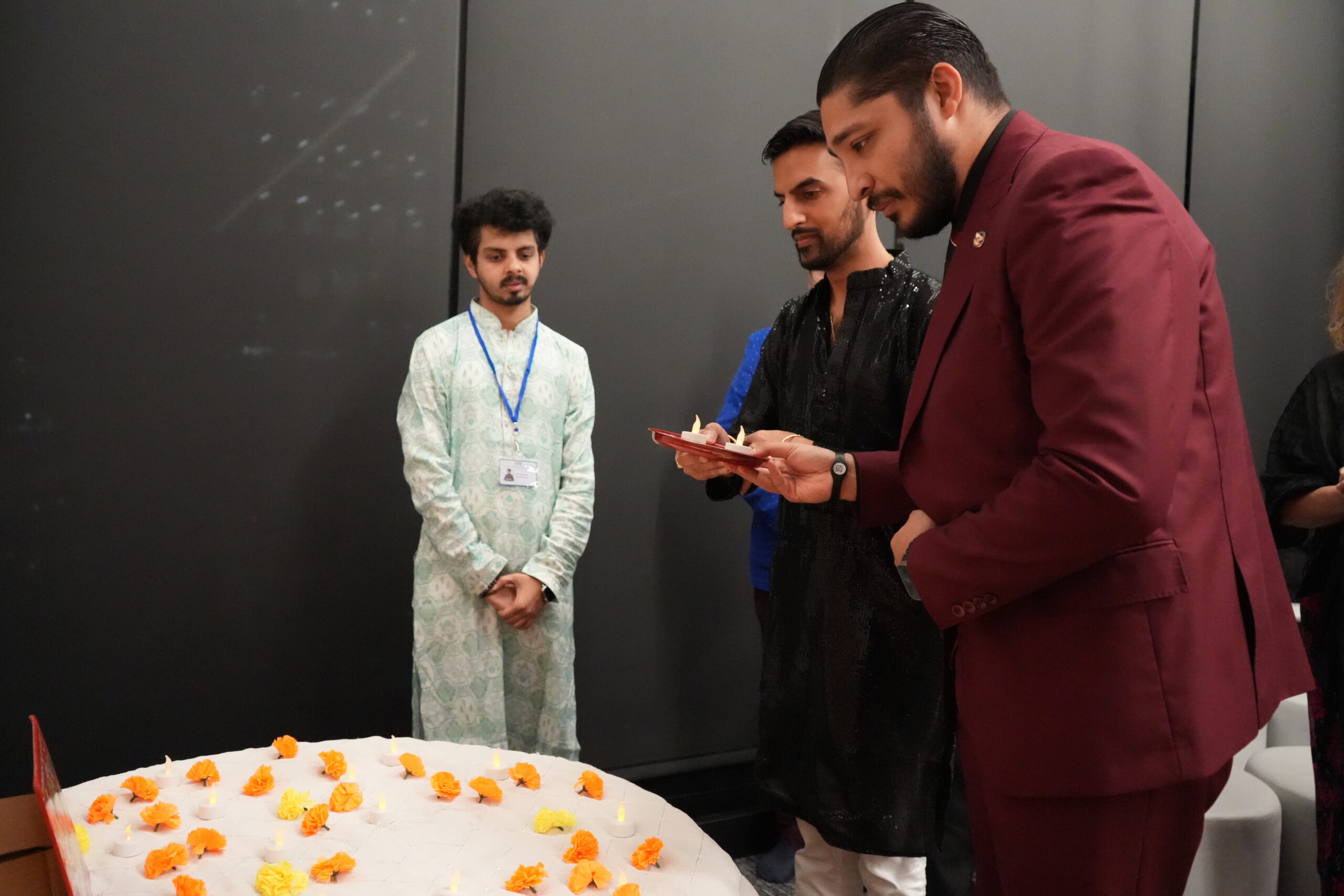
She was recently interviewed by the Chairman, Neil Trivedi, right here at Unity for Equality. She was asked questions regarding her early life, career, accomplishments, and what she plans for the future for District 4. Below, you’ll get to read Virginia Maloney’s answers to the interview questions provided. This is a great read if you want to learn more about the newly elected official personally and what she plans to do to better District 4.
You’ve lived on the East Side your entire life. How has growing up in District 4 shaped your understanding of what the community needs from their elected officials?
CM Maloney: I am a native New Yorker, with a deep connection to the East Side of Manhattan. Every corner of District 4 holds a memory – from the playground in Stuyvesant Town in the southern part of the district, to the Corner Book Store on 93rd Street. At the same time, the East Side has evolved: demographically, economically, and in regards to the community’s priorities around affordability, public safety and housing. District 4 has always had a community that is deeply engaged and expects a high level of responsiveness from local government. People here don’t hesitate to raise issues to their elected officials, organize around them, and follow through until they see action. That’s the standard I grew up around, and it’s how I approach the role now.
***
Your mother, Carolyn Maloney, is a former U.S. Representative and former New York City Councilmember. How has her career influenced your path into public service, and how do you plan to distinguish your own approach?
CM Maloney: My mother served on the City Council and in Congress for most of my life. I’m incredibly proud of her commitment to public service and her record of accomplishments. She showed me what it means to be a relentless advocate for constituents and how that translates into results: protecting consumers through the Credit Card Holders’ Bill of Rights, securing justice and long-term support for 9/11 victims through the Zadroga Act, and delivering major infrastructure investments for the district, including the Second Avenue Subway. While we share the same commitment to public service, I approach the role through my own lens. I have worked in both public and private sectors, including a decade in the technology space. That background shaped how I think about execution how systems work, where they break down, and how to improve them. In my role at City Hall, my experience translates into a focus on government efficiency: how quickly it responds, how effectively services are delivered, and how we make it work better for the people who rely on it.
***
Why did you choose to study Public Policy and Environmental Studies? Was public service always something you saw yourself doing?
CM Maloney: I always knew I was interested in public service, but I didn’t know exactly what form it would take early on. Being around government from a young age made me curious about how policy translates into real outcomes, so I majored in Public Policy in undergraduate, studying a mix of Economics, History, and Politics. Environmental Studies was more personal—I’ve always loved being outdoors, and over time that grew into a deeper interest in conservation, sustainability, and how we take care of the places we live. My senior thesis focused on green economic growth in US Cities, and I even spent a summer distributing solar ovens in rural Bolivia. More broadly, I didn’t feel pressure to go straight into public service. I wanted to build my own experience and perspective first before deciding how I wanted to contribute.
***
What was your very first job out of college, and what did it teach you?
CM Maloney: My first full time job out of college was at Deloitte Consulting in DC, where I worked in Strategy & Operations for Federal government agencies. One of the most memorable projects was advising the Federal Railroad Administration on the high-speed rail program for the Northeast Corridor. It was a crash course in how complicated large-scale public projects can be. I learned quickly that even when there’s alignment on the Federal level, execution happens on the ground. Big ideas matter, but they only work if they’re implemented well by state and local partners. That experience inspired me to move back to New York, and start working for the New York City government in Economic Development. It’s also why, in my current role, I’m very focused on coordination and follow-through. Whether it’s something as large as long-term infrastructure planning or as immediate as resolving a constituent issue, the job isn’t done until it actually delivers for people.
***
You spent years in the technology sector building accessibility products for blind and vision-impaired individuals. What drew you to that work?
CM Maloney: I’ve always been interested in how technology can be used to solve real-world problems, particularly in ways that make everyday life easier and more accessible. I was drawn to accessibility work because it’s one of the most direct ways technology can improve someone’s independence. AI-powered glasses designed for people who are blind or low-vision help thousands of people navigate the world every day. The glasses can describe surroundings, read text out loud, identify objects, and even connect users hands-free to a network of sighted volunteers through Be My Eyes. It’s an example of how advanced technology can be applied for good.
***
Can you describe more about the accessibility products you worked on and what your day-to-day role involved?
CM Maloney: I worked on the Ray-Ban Meta Glasses, including the AI-enabled features that act as a hands-free assistant for people who are blind or visually impaired. The product integrates a camera, microphones, and Meta AI to provide real-time audio descriptions of the user’s environment. Someone can ask, “What’s in front of me?” and get a detailed response describing objects, text, and surroundings. It can read menus, identify items, and help users navigate unfamiliar spaces. One of the most impactful features was the integration with Be My Eyes, where users can say “Hey Meta, Be My Eyes” and instantly connect to a live volunteer who can see through the glasses’ camera and help with everyday tasks. My role was Product Manager: responsible for working across engineering, design, and user research to translate real user needs into features that actually worked in real-world environments. A big part of the job was listening to feedback from customers, and continuously refining products to make them intuitive and genuinely useful. Those PM skills shape how I think about public service now. The best systems aren’t built around what we think people need—they’re built through research and data on how people actually live.
***
Affordability is central to your platform, but it’s a challenge that has stumped city leaders for generations. What do you believe previous officeholders have gotten wrong, and what would you do differently?
CM Maloney: Affordability is one of New York’s defining challenges, and comes up in almost every conversation I have. Costs have outpaced incomes across nearly every sector. Rents are near record highs, homeownership is out of reach for most, and every day expenses from groceries to transit keep rising. At the same time, small businesses face rising costs, and wages aren’t keeping up—making it harder for people at every income level to stay in the city. As Chair of the Economic Development Committee, I am focused on both sides of the equation: what it costs to live here and what people earn. When we invest in growing industries, support small businesses, and create strong workforce pathways, we can raise wages and expand opportunity. Without that, even moderate costs become unaffordable because incomes aren’t keeping pace. Where we’ve fallen short is treating affordability as a single issue instead of a system—we need to lower costs while also building a city where people can earn enough to build and sustain a life here.
***
You sit on the board of the NYC Foundation for Senior Citizens. What does the experience teach you about the daily realities of elderly residents in New York City?
CM Maloney: I served on the board of the NYC Foundation for Senior Citizens prior to becoming an elected official. The organization offers housing, social services, and support programs to help older New Yorkers live independently and age safely in their communities. This experience gave me a direct view into the challenges older New Yorkers navigate day to day. And now as a policy maker, I’m focused on making sure we’re investing in the kinds of services that allow people to remain in their homes, stay connected, and age with dignity.
***
As the population ages, what do you think is the single most underfunded or underserved area of elder care in New York City?
CM Maloney: Most older New Yorkers want to stay in their homes, but the system isn’t built to make that easy. Seniors are living on fixed incomes, all while costs continue to rise. Services are fragmented, and people often don’t know what they qualify for or how to access it. The biggest gap is in coordinated, in-home support. We need to solve the housing crisis, but for seniors it’s not just about having an affordable apartment. We also need to make sure people can actually live there safely and with dignity. That means we need to expand on-site and community-based services that help coordinate healthcare, connect people to benefits, and reduce social isolation. When those supports are in place, we can stabilize tenants, prevent unnecessary hospitalizations, and make aging in place a real, sustainable option.
***
You were recognized by City & State as a 2025 40 Under 40: Rising Star. What does it mean to you to be recognized alongside so many other accomplished young New Yorkers?
CM Maloney: I am very grateful that City & State chose to recognize my work alongside so many accomplished people who are delivering for New York. For me, the award is a chance to reflect on the work my office is doing and the responsibility that comes with it. It’s also a reminder to keep up the good work, and to stay focused on delivering for the people I represent.
***
Looking back at your career journey, which accomplishment do you think best represents the work that led to this recognition?
CM Maloney: I’ve built my career at the intersection of innovation and public service, with a focus on delivering results that people can actually feel in their day-to-day lives. There have been many different chapters: helping expand free public Wi-Fi in New York, working on infrastructure and public-private partnerships from DC, and building technology that improves accessibility for people who are blind or low-vision. At the center is a relentless focus on execution. I’ve spent my career learning how to move things forward–how to coordinate across stakeholders, work through problems, and stay focused on outcomes. 12. If you could point to one change in District 4 five years from now and say, “I did that,” what would it be? New York is in the midst of a housing crisis, with the average cost of a studio apartment at over $4,000 a month. This affordability crisis is the defining challenge of our city, and I would love to be a part of the solution. In four years, I want to be able to point to a piece of legislation or a change in local policy that results in an easing of the housing crisis and improved the lives of New Yorkers. More broadly, I hope the city is in a stronger place–that neighborhoods feel stable, small businesses are still here, and people feel like they can afford to stay.
It’s great to get an in-depth interview of Virginia Maloney as a person and how she worked her way up to get the position of councilmember for New York City’s 4th City Council District. We here at Unity for Equality hope her plans come to fruition and that everything for her runs smoothly as we look forward to working with the newly elected councilmember.